March 13, 2012

“the songs of sickness can become the songs of healing” :: the Typhoon interview

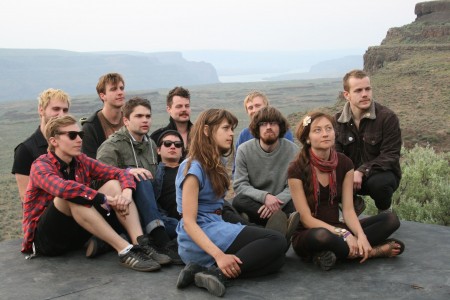
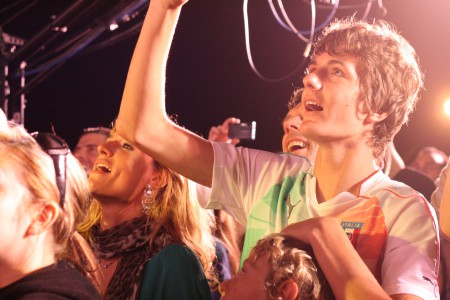
The music of Typhoon is big and connective and incisive; it’s thematically smart and expansive. This Portland band resides together in a big Victorian house (sketched on the cover of their latest EP), and perhaps it’s just because I live in a cohousing community myself, but the resonance of this arrangement radiates audibly in the wooly coziness of their music. Some months ago, I got to see Typhoon live for the first time — an event I welcomed with intense anticipation of the joy to come. I had watched videos of their live spectacle, all thirteen band members, and when the day came I was all over it.

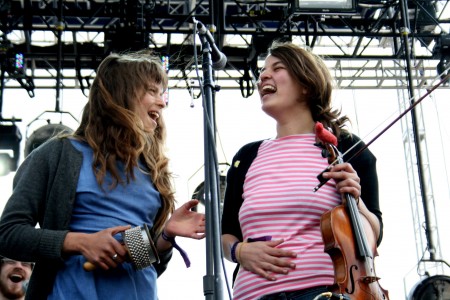
Thirteen people may seem superfluous (especially touring – they are coming to my house next week. I’m still debating where to stash them all), but when you see them onstage, you realize that everyone has their own hue and shade to fill into the song – three brass players, three drummers, two guitarists, one on keys/bells, a bassist, a violinist, and a cellist at least were what I counted when I saw them in Washington. It’s pretty damn incredibly lovely.

The arc of the songs and the threads woven across albums fascinate me. I could tell the first time I listened that this music was crafted by a songwriter who gave uncommon care to the big picture, in all the shades. That primary songwriter is Kyle Morton, and I got to sit for a while with him and explore these broad brushstrokes in his music, how he sees the songs in his head and projects them outwards for the band to fill in, and how his struggles with chronic illness growing up have molded his music. It was a fascinating conversation that I am thrilled to finally share with you.


FUEL/FRIENDS INTERVIEW: KYLE MORTON OF TYPHOON

Fuel/Friends: So with thirteen people, how does the songwriting process take shape into something coherent and harmonious?

Kyle: I do most all of the writing, and more and more it’s becoming the band doing the arrangements. With the new EP, there was definitely more band involvement with the arrangement than we’d had before. You can hear it on this record, and when I listen back to Hunger and Thirst now — it’s much sparser. I do like that, but on the new EP if you listen to the tracks, there are so many more times when we’re playing all together, pockets of all the band coming in together, utilizing all of us.

In my writing, when I look at songs, I look at them in terms of the whole piece, and even the albums themselves are part of the whole piece, so I hope that all of our albums, taken together, can be looked at as kind of a continuous body of work. Like, for instance, one of the songs off of the new EP is actually a really old song, “Claws Pt 1,” and “CPR – Claws Pt 2” is on the older album. I wrote it before but it was released after because it made sense. There are definitely those connections across records. In my brain I want our music to be something coherent, at least coherent to me — to be coherent in me.

So a lot of themes are going to come back on the next record, I think, and they’ll always be there. On the one hand, maybe that might seem unoriginal, to keep recycling the same shit over and over again, but I also think novelty is overrated, and I think coherence is undervalued.

It seems to be a nod to the listener, almost, in an era where a lot of times it’s just one or two songs people will have heard from you, it’s a way of rewarding people who take the time to listen to it as a full arc.

Yeah, it may not seem like much, but I think that requires a pretty good attention span these days, like there’s a “Typhoon theme” on the horns that we use in a few different places, and it’s gonna come back around – you can hear it, we snuck it in at the very end of this song called “Happy People” on Hunger and Thirst, and it’s on a new song we working on as well. Nods like that.


I also hear a fascinating and affecting theme of mortality and human frailty throughout your records, specifically on songs like “The Sickness Unto Death” and “Summer Home” that seem to explore your struggle with Lyme disease and the bug that bit you. What are some ways that struggle has informed, or not informed, your songwriting?

I wrote that song “The Sickness Unto Death” not only about me, and my “death,” but I’d also been reading the Danish philosopher Soren Kierkegaard, and he wrote his book The Sickness Unto Death, which I plagiarized the title from. And maybe songs aren’t the right …form for those kinds of ponderings, but that’s the only thing I’m interested in writing about. With music, it’s a very interesting synthesis for me – especially trying to make the themes in the instrumentals reflect the themes in the words. It’s difficult.

Even going back to Greek philosophy, and this idea that as you get older, you start to lose your desires, which can be a good thing and a bad thing, this losing of desires for sex, or for food, because all those things are causing you pain. But I imagine, because on the other hand I see a lot of bad coming from people’s desires, and desire itself being kind of an interesting point. So that’s why I have an album called Hunger and Thirst, meditations on why we want to be anything.

When I started realizing all the things I wanted to do with my life, I didn’t want them, I just imagined wanting to be this person who was doing those things. And then I got sick [with Lyme disease], and it kind of ruined all those plans I had and I had to adapt, and it caused a lot of bitterness in me for a long time. It still does. I never grew tall, I never had the childhood that you’re supposed to have, without pain. But then maybe you don’t –maybe no one has that.

Letting go of the idea of what we thought we were promised?

Yeah. All these promises, they’re tenuous. On this last record, on the song “Summer Home,” and in lots of songs, you will see that reference to a bug that bit me, which is just –this beast, you know? This thing that affects your life, and never even seeing it. It’s almost not even the tick itself. It’s the implications of it. It becomes a symbol. It’s when you first realize that some of these promises you have, assume or take for granted that you deserve it, and that’s a pretty sobering moment.

I think “The Sickness Unto Death” does feel, at the end, like a quiet and dark place of death, but then there is also definitely, as a listener, this feeling of rebirth as it swells and explodes into “The Honest Truth,” which is like the next step – at least in my mind.

Yeah, I’ve been trying to research this for a long time, but music — I imagine its early roots being tied and intertwined with early religion. And nowadays, the world is such a secular place, but we still have music, and it still has something sacred about it. There’s glimmers out there.

Trying to capture that, I guess that’s the thing. There are a lot of problems, capturing that glimmer and then trying to share that with someone — and it changes. I don’t know how to reconcile any of that.

Do you write the songs with all the parts from all the band members in mind?

How that’s worked in the past –this is cool– I hear it in my head a certain way first – it plays itself all the way through, and with parts. But then when I try to express those to people, the way it comes out doesn’t sound exactly like what I hear in my head, but it sounds better, even. It’s like a weird projection of the inside my brain, which is not to say I’m just using all these people as a screen for what’s inside my brain, because they’re all – most of them are better musicians than me, technically speaking. But it’s just really lovely to get to hear everyone’s take on it.

So, it’s like they fill in the shading?

Yeah …and that’s the only way I’ll perform, I won’t perform by myself. That’s scary, and weird, and masochistic. But I really like performing with everybody. As opposed to being a performer, in front of people, I am much more comfortable reading, and writing — even though I wouldn’t make a very good writer, or philosopher. But music seems to work because it picks up in that place where rationality stops and the transcendent emotion that underlies all music, starts. At least, that’s what it’s always kind of done for me.

I am very self-conscious, and self-aware when I am onstage, of what a bizarre act it sometimes is. It’s also a really simple thing, though, this happiness – you’re not lonely when you have that many friends around. Typhoon used to be a lot less restrained, but not in a bad way. If you see videos of our old days, everyone kind of played everything, and there was a lot more extemporizing, but on the other hand I really like to see how we’re getting so much tighter. And hopefully we’re aware of the vanity of this whole thing, yet we’re still drawn to it – for hopefully the right reasons.

Maybe catharsis is best experienced with twelve other people on stage.

Yeah – you can’t even have that counterpoint unless you have the other members. There’s not the synthesis without the other people. In that way, with all of us up there, the songs of sickness can become the songs of healing.


Typhoon is playing all over SXSW this week, including headlining the awesome Colorado Reverb party that you should navigate yourself to at Dirty Dog Bar on Saturday.

Then as they traverse the great desert back up to the Pacific Northwest, they are coming through Colorado Springs for a gallery show that I will be hosting with our college radio station KRCC on Tuesday, March 20. Motopony opens, and it will all be terrifically wonderful. Please do join us.

You want to immerse yourself in this.

Tagged with , .
October 13, 2010

Talkin’ italiano with Jovanotti

heather_newpic_styled

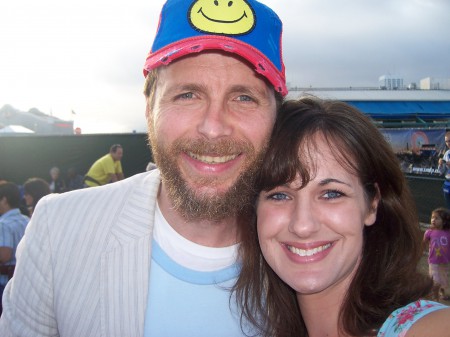
I’m intrigued by music that crosses borders, geographically and within perceived divisions of genres. As I’ve grown into a happily well-traveled, curious adult, I’ve (obviously) enjoyed expanding my ears beyond the pop hits, the oldies, and the cheesy synth hip-hop of my youth. One of the first global, non-American artists that started pushing some of those borders of my musical geography was the Italian artist Lorenzo Cherubini, known throughout Europe as Jovanotti.

I wrote about him late this past summer when I was preparing to go see his show on the Santa Monica Pier. I flew out to LA and back, spending less than 24 hours basking in this marvelously foreign glow, in order to take advantage of his handful of small-venue United States dates — a rarity for an artist who regularly sells out stadiums in Italy.

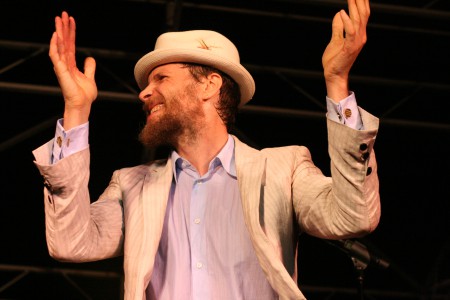
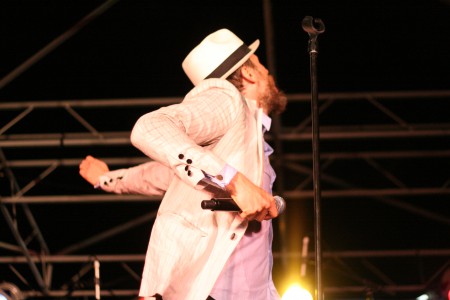
Pressed tight and sweaty with hundreds of dancing, singing Italians, lurching forward and back as one organism of enthusiasm, I remembered in their vibrancy what it is about Jovanotti that makes him so infectious. “Every Italian knows at least five Jovanotti songs by heart,” asserted one Italian-American reporter, and the crowd of stylish ex-pats that night certainly proved that point and beyond. I was thrilled by the enthusiasm, and –don’t forget– the dancing.

But you, dear reader, may wonder if it was only the faithful and the foreign who loved his show. No — there were plenty of uninitiated folks in the crowd on that Southern California pier that didn’t know anything more about Lorenzo, other than that respected indie-rock station KCRW was presenting the show, or maybe that, heck, it was an absolutely gorgeous summer evening by the waves. But by the end it seems safe to say that everyone was converted. I saw shining joy on people’s faces as they folded their blankets and put their shoes back on in the deepening summer twilight.

In San Francisco’s Stern Grove a few days later (a show attended by 10,000), the PBS reviewer wrote, “No one has more fun at a Jovanotti concert than Jovanotti himself.”

Jovanotti played a crucial part in my musical horizons opening, and evokes all those intangible boundary-pushing, dazzling moments of a semester spent abroad in a foreign country. He was one of the first artists I loved whose perspectives on the entire world was coming from a completely different place than all of mine.

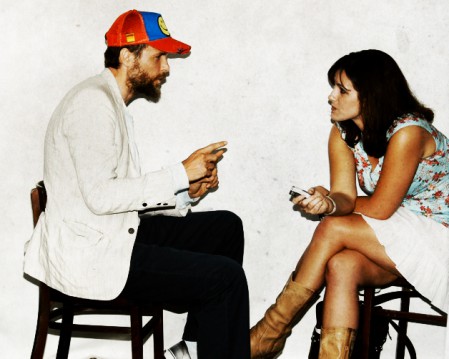
Therefore, meeting and interviewing him before the Santa Monica show was, to me, akin to meeting Bono (a man Jovanotti calls friend, due to their joint efforts on the Cancel the Debt initiatives in developing countries). Beside the ferris wheel and crashing waves of the Santa Monica pier, he greeted me warmly, we sat down, and we chatted a bit about music, creativity, social justice, and the importance of rhythm.

It was a terrific night.

Jovanotti 060

JOVANOTTI INTERVIEW
Fuel/Friends: The press has been writing about this tour and last summer’s tour as your attempt to “cross over” into American music. What do you think of that term, “crossing over”? Is it different when you play here versus Italy? What are your goals here?

Jovanotti: I don’t have any future goals. My only goal here is to have a good show, to make the people fun, to make the people feel good – this is the goal. I am not planning a career here, or trying to win the Grammy award, it’s not that. I’m having fun, I do so many big shows in Italy, you know? The chance for me to do some little shows here was stimulating. My job is to do music. It’s very exciting for me to do music in different places. The best thing is not always to do a stadium, but sometimes just one show in front of one hundred people.

F/F: How are you creatively inspired by the different places you perform?

J: I don’t know… I am more inspired by the different places that I travel. When I perform, it’s always an experience of giving, not of receiving. And so, I divide my life always into two phases – the phases of this out(ward) direction and in. When I do shows and I do tours, it’s the phase of ex-direction, so at the end of the tour I feel more vuoto, more empty than filled.

Then I have to stop and maybe, usually, I can go somewhere, wherever, alone. I go in South America, or Asia, it’s always something that attracts me a lot, to travel and lose myself in a town where no one knows me, and I don’t know nobody. It creates a condition in my mind that permits me to start approaching a new music form.

F/F: So, do you write better at home in Cortona or on the road when you are traveling?

J: Travel is like a way of training your observation. When you are in a place that you know well, you don’t see anything more. Ehm… when you go around the world, it is a way of practicing. My musical colleagues may all do this practicing in different ways, but we all must train our ability to observe, and our ability of creative synthesis. The synthesis is the final goal, to take a concept and synthesize it in one image. It is something that photographers do, it is something that you as a journalist do, with a phrase or an image or a word. Musicians may do it with a melody or a musical atmosphere, or with words.

For me, always the most difficult but stimulating part for me is the lyrical part of my songs. I always start from the lyrics. A song for me doesn’t exist until I have a word that gives me the key to enter the door. Then when I’m inside, I start, and sometimes it comes out in three minutes, sometimes it takes three years, sometimes it takes ten years. But at the end I am looking for the synthesis, when you can distill it down to the essence. I use different techniques. My favorite technique is that of the list. For me it is creatively very inspiring, I have books full of lists of everything. And then from that, it is a way to get an order. You know, creativity is a job. I don’t believe in pure inspiration. I believe in hard work.

F/F: Hmm, I can see your listmaking in your music — a lot of your songs will detail many seemingly simple things that add up to a complete and powerful image or effect.

J: Yes, that’s the way I like to write. I don’t have the talent to create a plot. I admire a lot my colleagues that write a song that is an intricate story. My talent is more impressionistic, less linear. I would like a lot to develop the narrative part to tell a story about somebody, in America, you know you have someone like Paul Simon or other folk songwriters. I love complex stories. It is something I am still not comfortable with what I am doing.

F/F: When you had that conversation with Bono for GQ magazine, you asked him about the moment of opportunity that lay ahead to bring the issue of Cancel the Debt to the forefront again, with the World Cup in Africa, and with Giovanna Melandri. Were your goals achieved with that?

J: No. No. But with Italian politics can be totally distant from our global vision of the world. We have a lot of problems with the politics. Italian politicians don’t have big horizons. The fact is that the African problem and poverty are not sexy from a media point. It is very hard to get the interest of the people. The politicians are only interested in the things that interest the people. The only great thing in Italy is that we have the church, so with the church you can attract the attention in these kinds of topics. So you have to pass through the church to get the attention of the politicians. So working in that way, we’ve made good gains towards Cancel the Debt, but after 9/11, everything started to be much harder in getting that message heard. With the soccer games, our political class didn’t catch the opportunity.

F/F: Are you still working towards African debt cancellation?

J: I am still working with it. But it is very difficult. When you are talking about poorness, people don’t want to know anything about that. It’s very hard when you are talking to push the button of compassion and charity inside people. Because with compassion and charity, we didn’t get many results.

But the next step –the “upgrade”— would be to go at it from a justice standpoint, it is a political justice issue. Poverty is not about a failure, or a lacking. It is a political issue, and Bono is also doing a good job at drawing attention to that. In Italy it is harder, because the church monopolizes the conversation, but uses it in a way that won’t talk about AIDS or other things that are totally central.

F/F: Last question, and then I’ll let you go because it sounds like they are getting ready for you out there. If the 20 year-old Jovanotti DJ could see what the 40 year-old you was doing right now, what do you think he would think?

J: (smiles) I think he would be happy. Maybe criticizing. When I was a DJ, I didn’t like musicians, I liked machines. I was doing hip hop, so for me the drum machine and the computer were all I needed. In the future I would be drawn back in to more machines. Rhythm for me is still the most attractive thing in music, especially when I was growing up. Rhythm has only expanded for me as I have learned more about different kinds of music. It has gotten to be the biggest thing — there’s nothing that I don’t like. But Rhythm and words have always been central. When I did my first commercial enterprise, I called it Soleluna, ritmo e parole – rhythm and words. That is what I will keep looking for, ehi?

****

Indeed. This video is exactly what my jaunt to Los Angeles was like, in seven pro-shot minutes:

Jovanotti is working on a new album (that’s what he is talking about in that video up there) which will continue to fuse Latin, African, European sounds and beyond. I do hope that he returns to the US, because he is a terrifically versatile, infectiously enthusiastic performer, and if you ever get a chance to see him, you must.

Jovanotti 044

Jovanotti 2010 144

Jovanotti 100

[top photo credit Mary Leipziger, who happened to be walking by. All my photos are on the Fuel/Friends Facebook page]

August 30, 2010

The musical brilliance of Friday Night Lights

Liza Richardson photo by Salvador Farfan

Back in the freshness of springtime, I came clean before you all with my newfound affection for the TV show Friday Night Lights. Shy as I was about falling for any sort of TV drama, I was converted (to the cult of Tim Riggins, thank you) over Thanksgiving last year, when a friend loaned me all the seasons I’d missed and I gorged myself not only on the solid plotlines and character acting, but also/mainly the absolutely impeccable music.

Within the first few episodes I heard not only the arcane opening track from my favorite Ryan Adams album, but a Daniel Johnston cover, the Avett Brothers, a rare acoustic mix of a great Killers song, and plenty of new artists who sent me googling lyrical snippets. Oh, and don’t forget, the show is liberally laced with music from the terrific Explosions In The Sky. Just get right out of town – this was fantastic [listen].

I decided then and there that I completely loved whoever this kindred spirit was out there, picking all the music as if they had crawled inside my own head, my own record collection. When I found out it was a kickass female doing this music supervisor’s job (in a mostly male-dominated industry), I loved it even more.

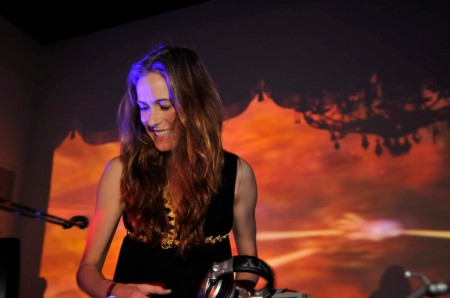
Said kickass female music supervisor for the Friday Night Lights series is one Liza Richardson, longtime DJ at the inimitable KCRW radio station in Southern California. She also works on music in films (The Kids Are All Right and Eat, Pray, Love are two recent projects she was involved in), was invited to be the first DJ at the Academy Awards, and even got to do one of those cool Apple commercials. Her musical tastes run in all the same veins mine do, and I was excited to talk with her about her job, how she stumbled into it, and what she loves about soundtracking all those wrenching small-town Texas moments.

clear-eyes-full-hearts-450x301

INTERVIEW: LIZA RICHARDSON, FRIDAY NIGHT LIGHTS

Fuel/Friends: Do you specifically emphasize regional or local music in setting the West Texas feel? (the Gourds, Explosions in the Sky) or are you going for an overall atmosphere of folks (American Catapult, AA Bondy, or Ryan Adams) who aren’t from Texas, but feel like they could be?

Liza Richardson: I do try to focus on Texas music, I mean I went to college at SMU in Dallas and I was in radio for four years after college in Dallas – that’s where I learned to DJ, that’s where I started really learning about music and I’ve brought that to my work with Friday Night Lights, happily. But there’s so much music like Townes Van Zandt and Roky Erickson, two examples of musicians that I’m fanatical about but have never been able to convince everyone about. Song selection is a process, and I’m not the boss — I present ideas and they get chosen by editors and directors. So I really do try, but ultimately it’s up to them and they’re gonna pick what feels good and what feels right for the show. There’s a wider audience than Texas.

But I was successful at getting artists like Butch Hancock, Uncle Walt’s Band, and Jimmy Dale Gilmore who are great Texas artists, who aren’t widely known outside of Texas but are great Texas unsung heroes. I think Texans appreciate when I am able to get all these cool Texas artists in, and and it’s a good feeling. For example, we used the Cashmere Stage Band, which is this cool recent reissue from the Seventies. We used that at a pep rally where you heard like an exciting big band thing, and it was actually this high school band from the 1970s from Houston. Stuff like that is so cool for me.


F/F: Have you ever seen any negative effects from a song or artist you’ve highlighted –like a “flash in the pan” phenomenon– or is any exposure usually good exposure?

LR: Do you mean where I had a regret for putting it in? The only regrets I have are songs I don’t put in (laughs). Sometimes songs get on the show that have been used a million times before on other shows. But that’s the music supervisor’s curse, I guess. I mean it’s not so bad, sometimes I need to get over that. But all music supervisors want to be distinctive and creative, but you have to always remember what’s best for the show. I mean, for example, using “Political Scientist” by Ryan Adams was my idea, and fit perfectly. You recognize that song but not many would.

F/F: Is it kind of like every show using Jeff Buckley’s “Hallelujah,” perhaps? There seems to sometimes be a challenge to find something that resonates emotionally but feels fresh.

LR: Thank you! Yes! Exactly, like that. Or Gary Jules’ version of “Mad World.”


F/F: What do you perceive to be the differences between DJing and music supervising?

LR: Ooh, totally different. Not much in common with each other at all. When I am DJing, I’m not thinking about the big picture, I am thinking about how much this song rocks on the radio. But with music supervision, there might be songs I don’t personally like so much, that I would never play on my show, but they work great as part of this show. It’s two totally different ways of thinking. DJing is the most ephemeral, but then I also always say TV is ephemeral compared to film, because television moves quickly and you have a new episode each week. There’s a different level of creative commitment.


F/F: Do the characters ever suggest music? Have the show’s writers ever worked around a specific song you found and wanted to use?

One time for Landry’s band, Crucifictorius, when Devin was auditioning and Landry was down and out about Tyra, she suggested they needed some Flaming Lips, “She Don’t Use Jelly.” Well, that was written into the script and it was a really good idea and it stuck. A lot of songs that are written into the script might not make it – things change, budgets change, so I wasn’t sure if we’d be able to afford that Flaming Lips song. But happily, it all worked out. I had lined up other songs as alternatives, like I had something worked out with The Pixies, which doesn’t seem like it would be less money but it was. I had the challenge of finding other bands with that anthemic indie feel, where I could work with publishers and get a deal that we could agree to.

That’s an example of what I do all the time. I mean, there might be a karaoke scene where they want to sing “American Girl” by Tom Petty , but there’s no point in spending all that money for that one song. My job is to find something cheaper for karaoke that’s still funny or sweet or still fits. There’s tons of that.

F/F: It sounds like a treasure hunt but with a lot of negotiating.

LR: Yeah, on something like that it can be difficult to start creatively with trying to find the right song to fit the scene. I will often start by calling the publishers that I have relationships with and asking them to look at their catalog, telling them, “okay here is my budget,” and then having them come up with their ideas. That way, if I only have one day to do this I don’t get screwed. I take what they give me and then go with those ten ideas and go with whatever ideas I think are the best. It’s one way to do it. It’s called pre-clearing the songs. I know that every song I get from this publisher will be clearable, they already know that they don’t need artist approval, it will fit in my budget, there’s no negotiation. We have to consider all those things before we even get to licensing.

F/F: Has licensing gotten successively easier as the show has gone through four seasons and gathered more fans and a reputation for good music?

LR: Oh yes, definitely. People love the show, they’re convinced of the show’s quality. But it’s not a money show, songs get replaced when they make it to DVD. NBC can clear for different musical options per song – a two year term, a five year term, an all-media term, and then at some point they’ll figure out their licensing strategy, and which term they’re going to pick up. Friday Night Lights is a two-year term. So let’s say for a Bob Dylan song, perhaps for all-media it would cost $40,000, a two-year term on that is more like $4,000-$6,000. There are some artists like the Velvet Underground and they weren’t interested in the two year term. They were only interested in the full term, so they passed.

In the beginning when we first announced our two-year term, a lot of bands were all worried about where licensing was heading and how we were all doomed, but as we went along we realized that a lot of bands were fine with the two-year term because it wasn’t exploitative, we weren’t going to use their song forever. In a way it’s not a bad deal – they get great exposure. More and more young bands don’t mind that it’s a two-year term.

F/F: So the songs on the DVDs aren’t always the same ones in the first run of the show?

LR: Not always, no, unfortunately. In fact, I’m glad you saw the Ryan Adams clip – unfortunately they can’t afford to buy all of the music we put in the initial series, there’s no way. It would cost millions of dollars. In the actual show there’s a ton more music, but they replace it – there’s a company we use called Five Alarm Music, a production library music house, and they’re in charge of finding things that we like that will be okay, that will fit in as well as they can. In one season, we did really well at getting a lot of songs through to DVD, I can’t remember if it was season one or season two, where they kept a lot, but other seasons we’ve had to rip a lot out.

F/F: Is that hard for you? Is it like making a mix tape for someone and then finding out later that six songs were cut and replaced?

LR: Oh, it’s so heartbreaking. I mean, I don’t have to do the re-musicing, so I just try to forget about it. I get my final air copy of the season, and that’s what I have to keep! I find that the music still works, and honestly it’s just a great show so that comes through, always.


F/F: What music are you excited about these days? Are there artists that you’d love to use on the show?

LR: Hmm, okay, well here’s a couple – Band of Horses, New Pornographers, maybe The National, I think we should be using these artists. I think we should be using this artist named Jonathan Tyler, even though he may not be hip and cool, but maybe for the football stuff and the strip club – just straight up rock and roll. I’d like to use the Dead Weather, and there’s these guys called Kings Go Forth, they’re new but they sound very vintage R&B, party kind of vibe. I’d love to get that sort of music onto FNL.


F/F: I’ve talked to students when I’ve spoken at colleges who are interested in getting into music supervising. If this were Career Day, what would you say? Is there a recommended tactic, or is it true that everyone just seems to get into this in a different way?

LR: Yes, everybody has their own story for sure. If you’re in college, well – if someone is making a film, be the music supervisor on a friend’s film. I would also suggest trying to get an internship in radio or something in music – sometimes letters or resumes sent to me from strangers will impress me. It’s tricky, there are so many ways in. It’s not a high-paying job, so there’s turnover.

When I first started in music supervision, I was shocked at how my KCRW radio experience had nothing to do with anything in this world. I couldn’t get a job, even though I was pretty happy with what I’d accomplished in radio and KCRW is a fairly well-respected tastemaking station. I had to develop this as a whole new career, and just work my way up. I’ve been doing radio for over twenty years, and music supervision for only ten. For me at this point, radio is the greatest hobby in the world.


[top photo credit Salvador Farfan, Texas photo credit David Kozlowski]

July 23, 2010

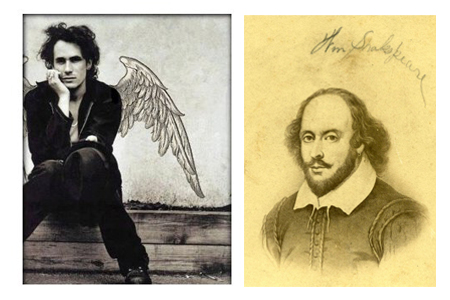
Interview: The minds behind the new Jeff Buckley/Shakespeare musical

buckley_shakespeare

In a few weeks, the new theatre production of The Last Goodbye will make its highly anticipated world debut at the Williamstown Theatre Festival (August 5th – 20th). As I wrote back in April, this new creation takes Shakespeare’s “Romeo & Juliet” and weaves fifteen songs from my beloved Jeff Buckley throughout it.

Under the summer stars, young actors and a rock band will put their hearts into letting Jeff’s music speak into the story of the ill-fated lovers we know so well. It’s also down the road from that Wilco-curated Solid Sound Festival. So yeah, why aren’t you going?

Even though I babble incoherently from lack of experience when talking about theatre, I was fortunate to talk to both the director Michael Kimmel, who first conceived of this pairing and worked with Jeff’s mom Mary Guibert to make it happen, and Kris Kukul, who is the musical director and actually wove the songs into the completed creation. It was fascinating to talk to them both, and I even got tears in my eyes at one point as Michael talked about why this play makes sense with this musician, this man. I think they get it. I’m excited to see where this production goes.

the-last-goodbye-3

THE LAST GOODBYE: DIRECTOR – MICHAEL KIMMEL

Fuel/Friends: I understand that the genesis for this whole melding of Shakespeare and Jeff Buckley occurred in your mind. Tell me about that.

Michael Kimmel: A little over three years ago I had this idea. I’ve always been a fan of Jeff’s music, I’ve had Grace for years and years. I was directing a reading of Othello and I was on my way to a rehearsal, and “Forget Her” came on my iPod. I started to hear this conversation while the song was playing, “She was heartache from the moment that you met her.” I heard these two voices in Jeff’s voice, a back and forth in his lyrics, seeming to really be fighting. I had this moment where I said, “Wow, that really sounds like Romeo and Benvolio talking about Rosaline.”

Forget Her – Jeff Buckley

It was a buzzing in my head, so I went back and found the play and opened it up and Benvolio says to Romeo, “Be ruled by me, forget to think of her.” And it wasn’t just that amorphous connection, more importantly that conversation I heard was an active process — and what we ended up with was the songs taking their place in the scenes in a very interesting and cool way.

F/F: So it started with that song, and went from there?

MK: Well once that happened I went through that whole doubt process of, “Well there’s no way this would work with the rest of his music!” I spent three months combing through everything that I had access to, Sin-é, Mystery White Boy, My Sweetheart The Drunk, all the stuff that’s readily available, and came up with a first pass of songs that I thought really fit well. At that point, I pursued getting in touch with Sony Music to see if this was even going to be possible before I got too far down the road. They came back to me and said “Mary Guibert [Jeff's mom, who owns all the rights to his music] really wants to talk to you about this.” We ended up having a phone conversation where I told her what the idea was. She was really interested, and I think a little skeptical.

A few months later in mid-2008, she ended up being in New York, and I took her down to a theatre in downtown New York, and I sat on the stage with a copy of Romeo and Juliet and I just had a friend on an iPod, and I took her through the whole story and how the music fit, and then we went out for a three hour dinner, and she was really really interested. We left that night with her wanting to see more, and we decided that I would put up a concert reading so that she could get a sense of the whole thing.

Lauren Fitzgerald from Williamstown introduced me to Kris and we endeavored to put this concert reading together for Mary to see it, and we only opened it up to the Jeff Buckley fan club and a couple of industry people. We came out of there and she saw it laid out and she completely got behind us. At the same time, the person who programs this venue called Joe’s Pub, the cabaret space of the public theatre, ended up seeing our reading and wanted to program us on their stage. So we also ended up doing three concert readings at Joe’s Pub last May, and that was our first true public presentation of the show. I describe those readings as basically a rock concert with a little bit of a play thrown in, you know, no costumes, no sets, just a cast of fourteen and a live band.

F/F: Is there a clear time period in your version? Modern times? Shakespearean times?

MK: It’s definitely set in modern times, in a modern version of “Verona,” and by Verona I mean a landscape that takes its cues from downtown New York of now. The actors are mostly in their 20s.

F/F: Do you find that most of the actors come to it knowing Jeff Buckley better or Shakespeare better? Or both?

MK:
Casting is tricky, because it’s not musical-theatre music, and we’re not going to make his music something that it’s not – the rawness and the passion of it has got to stay for this to make sense. So finding people who can connect in that way is always a challenge, because it’s a different kind of performer than you would necessarily find in a typical “musical.” Sure, a lot of the people we’ve been working with are huge Jeff devotees – our Romeo is like a Jeff historian and has been hugely influenced by Jeff’s music. But that’s not to say that it’s not also equally great to find someone who is just being introduced to his music. I mean, the first time I heard Grace I said, “Wow, someone actually put a voice to that!” Seeing that in someone else is really gratifying.

F/F: How did it come to premiere at the Williamstown Theatre Festival?

MK: Well, the Joe’s Pub shows sold out well in advance and there were a lot of industry folks there. We spent a lot of time after those performances meeting with people and trying to look for the RIGHT path for it to take. It’s always been at the forefront for me, and I know for the others as well – getting this right.

F/F: What does that look like for you, this “getting it right”?

MK: It’s always constantly evolving and changing, from our first concert reading to Joe’s Pub, to now, it looks different. Now with the addition of choreography and getting it up on its feet, I think the way that it’s done right is that you walk out of the performance feeling re-invested in a story that’s been known for hundreds of years, and the music is the way in for that. And not only being invested in it, but seeing it in a different way. And you’ll probably appreciate this more than most, but I always say that there aren’t any halfway Jeff Buckley fans – they are a committed group.

F/F: It must be a good feeling for you to have the fans so strongly behind this, understanding what you are trying to do.

MK: I hear they are endeavoring to make a movie of his life, but where I feel that people can get behind us is that I am not interested in telling the story of Jeff’s life. What I am interested in is telling the story that I think he was trying to tell, and I think there is a big difference. It is a Herculean task. When I was able to start piecing all this music together, you really see a narrative, and it mirrors a lot of the narrative of Romeo and Juliet. I’m not the person to tell the story of his life. I am better suited to tell the story that I think he wanted to tell, the one that is suited to the stage.

What I learned from talking to fans after the readings is that people have a profound attachment to Jeff’s music that can be traced back to a very specific moment, whether it’s heartbreak or first love, and people have been sharing all their stories with me. That attachment and identification with his music, the intensity, I think is what makes it work so well. It connects those pieces to the story of these two kids, and attaches a sound to it that restores something I think the story has lost.

F/F: Right, because I think to a lot of people, Shakespeare just evokes high school English class, and that’s about it.

MK: Yeah! And I teach too at Fordham University in New York, and I teach it from a theatre perspective, not a literary perspective, and everyone’s impression is often just, “eh.” When you go back to the play, one thing that is always really interesting about Romeo and Juliet is that at the beginning of the play, Shakespeare ruined the ending. He tells you exactly how it is going to end. But what really appeals to me is that the ending is an afterthought, and it’s really the journey there that’s important – which also mirrors Jeff’s life to me.

Whenever anyone mentions Jeff now, it’s always, “died tragically. Died tragically.” For me, the death is an afterthought. It’s about the journey and this body of music that he left us and his evolution as an artist that matters. That’s the important part of it.

So when I say re-investing in the story, the idea is that if we do our job right, this time you hope that somehow it works out differently. And of course, after seeing umpteen productions of this play, there’s a sense of tragedy that pervades the whole play from the beginning – God, the weight of what happens at the end kind of carries through. For us though, it’s funny, and it’s messy, and it’s intense, and gritty and dirty and fumbling and insecure, but it’s never sad. It’s hopeful, you know?

jeff-buckley

KRIS KUKUL, MUSICAL DIRECTOR

Fuel/Friends: So were you a fan of Jeff Buckley’s music before this production? What’s been your connection with him?

Kris Kukul: I knew him a little bit. My previous roommate was a huge fan of his, she was the manager of the Club Fez in New York, and she would listen to him all the time. I knew some of his songs, but nothing like her – I got really familiar with him actually because of the show.

F/F: So has she seen the show?

KK: She’s obsessed with it. It’s amazing. She actually did know Jeff Buckley when he would play in New York. Folks like her are some of our biggest supporters. There’s always that hesitation before they see it, you know, like – “Wait a minute… is this going to sound like Cats??” I’m pleased with the way we are able to honor the music in this production, and tell the story with different voices.

F/F: Did you think it to be a daunting project, or exciting? Or both? I’m sure you became aware pretty quickly of the cult of Jeff Buckley fans.

KK: I wasn’t so much worried about how people were going to take it, it was more just trying to take a body of work and adapt it from the voice of one person who sings these fifteen songs. And to make it work for men, for women, for groups, for characters in this story. I think because of the strength of his lyrics, it just worked so well, and it wasn’t that difficult. From the very beginning, it was just so clear how well it worked together.

F/F: Explain to me what a music director does. I know that’s a dumb question, but help the non-theatre girl.

KK: For this production, I’ve done the orchestration and arrangements, and adapting the music, as well as the other side — teaching the singers the music, teaching the band the music. I conduct the band, and we don’t have any keyboards yet but if we put some in I might play that.

Jeff’s songs in the production aren’t exactly the same as they are on the album in terms of structure, there are a couple where songs are weaved together. Like “Lover, You Should Have Come Over” and “I Know We Could Be So Happy Baby” is turned into a duet, with Juliet singing the former and Romeo the latter. There’s a lot of group singing, the ensemble plays a big part so there is a lot of harmony added in that regard, added vocal arrangements. And I just had to make the songs fit the scenes, the dialogue gets weaved in and out.

F/F: So your job was taking the songs from the way Jeff recorded them, and not changing them drastically, but weaving them into the Shakespeare.

KK: Yeah – there are some of his songs that are like eight, twelve, fifteen minutes long, so we didn’t always use the whole songs, that would be a decision of mine and Michael’s, if we left out a verse, or chose to repeat something. Like “Dream Brother,” for example, is used in the dance where Romeo meets Juliet, and Mercutio sings the song as the scene progresses. So Mercutio sings a verse in a scene with Romeo and Juliet, then there’s another verse in a scene with Tybalt, and then everyone shows up at the party and the whole group sings together: “Don’t be like the one who made me so old, don’t be like the one who left behind his name…”

Then we weave in the line from “I Woke Up In A Strange Place” about “fate is gonna find your love” gets weaved throughout the whole play. So in the midst of the dance, then that line will come back in.

F/F: Ooh, that gave me chills.

KK: Yeah! I mean, it’s weird and uncanny how well the lyrics fit. Also in “Eternal Life,” which is the big song at the end of Act One where Mercutio dies, there’s the line about “there’s a flaming red horizon that screams our names.” That line is also used throughout the entire play, it’s in there like fifteen times. That one line sums up what these young people are heading towards.

spring-awakening-logo-1F/F: The only other theatre adaptation like this that I’ve ever written about on Fuel/Friends is Spring Awakening, when I went to an interview roundtable with Duncan Sheik who penned all those songs. Now, that seems like a similar idea of taking a very old play and trying to set it to contemporary music. Do you see any connections with what you are doing here?
KK: I think by definition they actually are similar, although I haven’t seen Spring Awakening, sadly! I know lots of the songs and like them actually, but I think with Spring Awakening is much more of a concept, in terms of there’s the play and then the songs are actually in a separate universe where they are internal thoughts, as opposed to a traditional musical where the songs are actually part of the story, which is what The Last Goodbye is using the songs for. In Spring Awakening, they had this device where every time people would sing they would pull out a handheld microphone, so that the singing became part of a different, expressionistic universe. That play is about sexual repression, so they would sing about all the things they couldn’t talk about in life. So that actually lends itself to that concept very well. Ours is just kids in love.

Jeff’s lyrics are also incredibly poetic, so Shakespeare meshes well with this highly beautiful, poetic lyricism. He’s much more of a poet than just a lyricist.

We’re not beholden to the original Shakespeare text either, a lot of things are moved around. In the play, as in all Shakespeare, there are these big soliloquies, and so in this production those soliloquies are what have become the songs and where we’ve placed them.

F/F: What kind of band do you have playing with this show?

KK: There is drums, bass, two guitars, and a violin and cello. Possibly some keys, if we decide to put piano in the songs – but that might tip it too much into musical theatre land, which we don’t want to do. Jeff rarely used piano in his songs, there’s only a few, like, “Everybody Here Wants You” where he uses just those two accent bars. I don’t want this to be American Idiot, I don’t want this to be Spring Awakening.

F/F: “Everybody Here Wants You” is among my favorite Jeff Buckley songs, so damn sexy. How does that appear in the play?

KK: Oh, that’s in that scene after the party on the balcony song, and Romeo sings it to Juliet, and then she joins in. Everyone is looking for her and she’s out making googly eyes with Romeo. But yeah, it’s such a great song, it’s like R&B!

F/F: How involved was Jeff’s mom in the process?

KK: She’s been at every performance, she holds the rights so she had a lot of say in everything, but she’s been totally supportive from the beginning. I mean — she suggested a viola once, but that’s been the extent, she’s been happy with the choices we’ve made and how the songs sound.

F/F: How does the choreography work with the music?

KK: We have Sonya Tayeh [editor's note: the one choreographer I have actually heard of!]. She’s a judge on So You Think You Can Dance, the one with the mohawk, and she is an amazing choreographer. We tried very hard to have non-conventional choreography, we didn’t want a lot of Broadway in it, we wanted weird, organic, avant garde work, and she absolutely did that. She’s incredible and crazy and amazing, but that’s what we wanted. Really young, hip movement.

F/F: So a lot of people without a background in theatre, like me, experience a kind of a disconnect when they go to musicals, because all of a sudden everyone is doing jazz hands and bursting out into song [reference]. Do you think non-theatre audiences will feel that way at all with The Last Goodbye?

KK: We’ve economized it, and the actors are young and sexy and rockstars, and it just makes sense. I don’t think people will have that disconnect, at all. But that being said, my mom is probably not going to like it. It’s loud. But it’s not a vaudeville play or a waltz scene. At the end of the day, it’s Jeff’s songs.

July 10, 2010

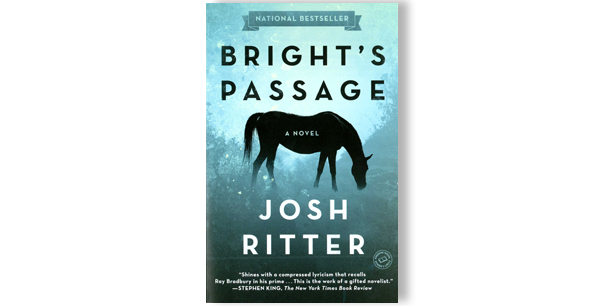
Talking to Josh Ritter in Telluride

joshritter-2643

I’ve written several times that I believe Idahoan Josh Ritter is one of the most important and talented songwriters of our generation, making music that is weighty and beautiful, that will stand up to time. Each of his six albums over the last 11 years has trod different musical ground, from folksy acousticism to uptempo soulful rock, and all shades in between. Yet all of this is ballasted by his insightful, dazzling lyrics – drawing lessons from mythology, psychology, religious narratives, archaeology, and historical figures, but never inaccessibly so.

I am an unabashed lover of words. I’ve been known to fall for folks strictly on the basis of their vocabulary. For me, the way Josh can excise things deep within me using only a handful of words is truly rare. Here is a guy who gets it, who pursues stories and emotions relentlessly to evoke them powerfully in his music. He gets my highest respect – I mean, even how created his own major at Oberlin College in “American History Through Narrative Folk Music”; I’m incredibly jealous that I didn’t think of that. Plus, he just rocks, and is one of the most ebullient live performers you will ever see.

I walked into this interview with so much apprehension, not because I thought he’d be anything but marvelous (I’d been warned how generous his hugs were, and he didn’t disappoint) but because I am so deeply impressed with what he does. My usual types of interview questions seemed to fall so short it wasn’t even funny. So under some big trees in Telluride on a Thursday evening, we just talked instead. And it was warm and wonderful. It went like this:


JOSH RITTER INTERVIEW

Fuel/Friends:I have a whole jumbled bunch of questions that I would love to ask you, but hmmmm . . . I think I want to start with something that references your new album, something I’ve rolled over a lot in my head these past months. In “The Curse” . . . do you think it was worth it for her?

Josh Ritter: Ooh, wow. That’s a really good question. I don’t know. Well, let me think . . .

I think that love is like a trap sometimes. You get deep in and you think, “This is the wrong place to be,” and by that time, it’s all built around you. I’m not sure, but I typically tend to stay away from an idea like [says grandly] “But it was all worth it.” I mean, if it wasn’t right in the end, then it wasn’t worth it. My experience with love has been this: if it’s good, then it ends good or it continues good. But if it’s not good then it’s just . . . not good. I mean what is the difference between a tragedy and any other sort of genre? The tragedy ends badly. I think of that song as a tragedy, but the interesting part to me is that he knows the whole time that he’s doing this to her.

F/F: So he knew? I always couldn’t tell if he knew, or if he just somehow hoped that it would be different this time, that his curse wouldn’t be destructive.

JR: Yeah, I do like the idea that it could be interpreted a number of different ways. But I like seeing him as calculating, like he built this thing around himself (“Think of them as an immense invitation”) so that this one day this would happen. As much as there may have been periods when he was truly in love, he was ultimately using her.

F/F: See, I was thinking about how it might not have been a bad exchange for her — I think of the lyrics about how they talk of the Nile and girls in bulrushes, and I mean, through that relationship, she got to be as close as she would EVER be to that world of Egypt that she had dedicated her whole studies to.

JR: I never thought about it quite like that. That’s really cool.

F/F: And the video is amazing. I never expected puppets to make me cry, the way his eyes twinkle.

JR: I know, I know! I feel exactly the same way! Liam (our drummer, who made the video) is a ninja.


F/F: Do you think that you are telling old stories with a new voice? Or new stories?

JR: Oh, old stories, definitely. There is nothing new. Whether it’s Cormac McCarthy, or Mark Twain, or whoever, they are never telling a story that’s completely brand new. There’s always an archetype. It reminds me of that quote about: “See what everybody else has seen, think what nobody else has thought.” (Albert Szent-Gyoergi). Songs are just reimagining old stories, old feelings. It’s like in science how an electron microscope helped us to see things that had always been all around us since time immemorial, but now we saw it in a whole new way.


F/F: There was a time you considered a career in science. Is music at all like science?

JR: I think science is like art, yeah absolutely. There’s a tendency to put your own discipline on a pedestal, and hold it above all others, but there are so many similarities. There’s an idea that scientists wear these white robes on a mountainside and write down these massive truths, but science fills a societal need of figuring out answers to questions we have, just the same as art does. For example, my parents are studying appetite and how it affect diabetes and obesity, and that’s important research, but really it is filling a need – the same thing that happens in art. You see a need out there that interests you and you follow it, and there’s gotta be a reason why you are interested in it. They speak to different needs in different ways. Science and art and religion are all very similar – all trying to fill in the gaps.


F/F: You mention religion, and many of your songs almost strike me as parables, or at least allegorical fables.

JR: A parable is like a multi-faceted metaphor. To go back to what we were talking about with “The Curse,” you can see it a lot of different ways – and that’s what makes it so interesting. Elaine Pagels is an amazing writer about religion, and she talks a lot about the Gnostic Gospels, and this idea that a few parables of Jesus had been written down before he died, and then after Jesus was dead all these people came along who knew these parables, but they meant something different to everyone, whether it was Peter and Paul, or Mary Magdalene, or Mary, or James, all these people that claimed to have a secret knowledge about what that parable meant – Thomas, the gospel of Thomas is the best example of that, and the secret teachings. Even when we talk about something like the Sermon on the Mount, there are things that seem perfectly clear, and also completely mystifying the next moment. Like Leonard Cohen says, “from the staggering account of the Sermon on the Mount / which I don’t pretend to understand at all.”

But maybe it’s really holding a mirror up to yourself, and how you interpret something tells you a lot about yourself. If you think A Good Man Is Hard To Find by Flannery O’Connor is funny, are you being honest with yourself, or are you just a mean person?


F/F: Well, I think my last question is…..

JR: (interrupts, leaning forward) – I got a question for you. What’s your favorite song in the world, that you’ve ever heard? If you had to choose.

(I am stunned with the vastness of this question, and Josh asking it to me. I feel like I haven’t studied for a really cool test. I cannot pick.)

JR: I think mine would maybe be “I Dream A Highway” by Gillian Welch.

F/F: Oooh! Such an excellent, excellent choice. That song has everything you could ever want. Hmm, that kind of reminds me of a song I love that I was listening to on the way here, I don’t think it is my favorite song ever, by any means, but one that speaks volumes to me – “Mary” by Patty Griffin.

JR: Oh, yeah! Yessss, that song is a SICK song. “….Stays behind and starts cleaning up the place,” (we both say in unison). It shows so many facets of her . . . and it makes you mad that she’s just being used every which way.


F/F: Agreed. So I want to talk a little about the sticky intersection between art and commerce – do you think they are mutually incompatible?

JR: I certainly hope music is a commercial venture. I have no bones about the fact that I feel I deserve to make a living off my music. I mean, what else would I do? People who choose to follow art are often ill-suited to be anything else. The best writers or directors or comedians, you cannot imagine them doing anything else. I’m curious if I could do something else – I mean I wrote a book, but I guess we’ll see if I can do that well. What I do helps me survive; I definitely wouldn’t want to do anything else. Whatever there is about God or whatever, I think it helps to believe you were put somewhere for something. And if someone decides their profession will be one of an artist, that’s a noble choice. In the end you are selling something that you think is important, because you are spending your time doing it. And also, I think people can tell when you don’t think it’s that important, and there’s tons of artists that are doing that as well.

Commerce and art are only good when you have a level of trust with the people that are buying your music. What they are actually buying is a chance for you to spend more time doing what you do – playing shows, putting out albums. That is your responsibility to account for yourself, for the money they have given you. That that’s gotten a lot harder, I think, is not necessarily a bad thing. The last 50,000 years of human history have been about artists working hard for very little, and only about 50-60 years now where that hasn’t been the case. So it is a kind of historical aberration right now. But I definitely think that the amount of stuff that musicians and other artists go through, and the relatively small returns, you know, we all deserve the same kind of normal life that everybody else has. Like I would like to have kids and be able to support them. So to those ends, there’s probably not much I wouldn’t do to be able to keep up playing music and be able to support my family.

Certain decisions would need to be made on a situational basis, like commercials. I did a commercial for Crayola with my song “Great Big Mind,” which I was really happy with. But I’m not The Black Eyed Peas, I’m not gonna go out and do, like, the Camel Cigarette Tour or anything like that. It’s also sort of a thing that sticks with me a little bit because I feel like people in the last generation have always looked askance at making money from commercials, you know? There are people like Tom Waits, who I love in every way, except that I don’t agree with him (in his staunch opposition to commercials). He came up in a different time where people sold records, and made money selling records, and that’s not a thing that happens anymore so we have to look in other places.

F/F: Do you ever feel the struggle in the balance between writing something that will sell and something that is artistically true to you? Is there a conflict selling something that comes from the deepest parts of you?

JR: There’s that point when somebody is running for office, when they are attracting the people who will vote for them based on who they are, and I feel it switches at some point (I believe Hemingway calls that the “pilot fish” – the one swimming ahead of the pack and leading all the other fish to that place). At some point it flips and then the leader becomes the follower of the other fish in his pack, the other fish that supported him to get him to where he is now. You stop becoming a leader and you start becoming a follower, you become part of the mob.

You cannot allow yourself to become that. If you try to shape your music to fill a certain hole, it’s not gonna work that way, it just ends up sounding bland. You have to do your own thing because that’s all that anybody really wants. It’s harder, but at least you don’t feel like you’re a faker. The worst thing I can think of would be writing songs desperately, trying to get a hit.

F/F: It reminds me of the article I read once about Weezer trying to mathematically analyze their hit songs, what made them hits.

JR: Everything I’ve ever seen with music leads me to think that there is no way to know what people are going to like. I think I know, but I don’t have any idea of what happens once it leaves me.

All you can do is do what you do, and hope that the side effect of making music that you yourself love is that other people are going to love it too. And when I die, I’ll leave something behind that I was actually proud of.


joshritter-2623

joshritter-4405

joshritter-2694

[photos by the luminous Sarah Law. His hands in the top picture remind me of this. Thanks, Sarah.]

January 12, 2010

“A new sonic playground” :: Works Progress Administration interview (Glen Phillips)

Nashville 2009 034

One snowy Sunday night in October, I sat at my kitchen table after tucking my little one into bed and realized that Glen Phillips of Toad The Wet Sprocket was playing at that very moment right up the road with his new band Works Progress Administration, and I had completely missed it. After listening to their bluegrass-laced toe-tapping goodness, I started looking up other tourdates and noticed they were playing in December in Nashville, where a dear friend lives. And thus, this edition of musical adventure was born.

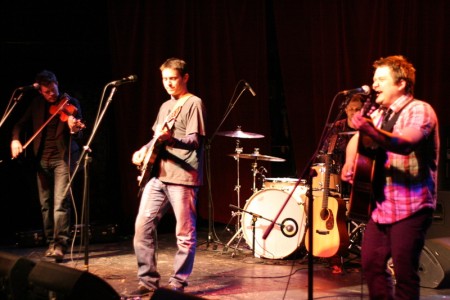
Works Progress Administration is an expandable collective, centered around the songwriting skills of Glen Phillips, Sean Watkins of Nickel Creek, and Luke Bulla of Lyle Lovett’s Large Band. In various incarnations live and on the album, they are fleshed out with folks from other bands like Soul Coughing, Elvis Costello’s Imposters, and Tom Petty’s Heartbreakers. They were playing at the storied Exit/In in Nashville, and I arranged to interview Glen and his new bandmates. To say this was a big deal for me would be an understatement.

I have loved Toad for more than half my life, and with my entire heart. They were one of the first bands I really claimed as my own during young adulthood, and whose perfect songwriting (“Windmills,” anyone?) has taught me so much and fortified more parts of me than I can count. I am a Toad-saturated girl, through and through. I once wrote, “listening this afternoon to toad the wet sprocket does many things for and to my psyche. the first sensation is definitely a heady and pleasant one, loaded with a thousand really good memories and the fierce scent of youth and optimism.” I still feel those things when I hear Glen’s distinctive, earnest voice on any of his current solo projects and collaborations. I was curious to talk to Glen and learn more about how his songwriting has shifted over the years, where his musical interests are taking him, and what he hopes to accomplish next.

I got all that and more when Glen and I sat down with his bandmates Sean Watkins and Luke Bulla after soundcheck one December afternoon. It was one of the most fascinating discussions about music I’ve had in a long time.

wpa-11WORKS PROGRESS ADMINISTRATION INTERVIEW


F/F: I am a longtime fan of Toad the Wet Sprocket and also your solo work, Glen, and one thing I’ve always admired is the songcraft behind your music. As a collective I know you all contributed to this album, and I’m wondering if the songwriting process changes. Since we’re in Nashville, Dolly Parton once said, “Writing songs is my private time with God.” Are you each still working personally and privately on writing your songs, or is it more of a collective effort now?

Glen: Most of the songs came in complete from each of the songwriters – we knew we were doing the album and we just saved up things that we thought would work for the group. There was one co-write that Luke and I did (“Cry For You”) but that was the only actual co-write on the record. And that was a very natural collaboration, like, “I’ve got this idea, let’s play with it.”

There’s a certain way of writing when the songs are for a group like there, where I’d say the difference is mostly you can write with others’ orchestration in mind. Like the song, “Already Gone” would not be a lot of fun to sing by yourself because the whole chaos of the chorus is this three-part, Twist and Shout-style buildup. So you have the freedom to write for harmony, for a particular kind of space or texture for the band.

Sean: I love writing for projects. I didn’t write anything specifically for this album, the songs I contributed were already in place. But I love getting that opportunity to work within the constraints or capabilities of a group – a new sonic playground to aim for. It’s really fun to do that. And I’m always trying to write as much as I can since new reasons will always come up when you need songs. You can never have too many of them sitting around.

Glen: I should just say too that we got together and did this album very quickly, so the next album is really going to be based around this particular five-piece, and we are going to be writing specifically for this project. It will less anarchistic; we’ll have a much better idea of what the palette is.


F/F: There was a quote I read about the making of this album about trying in your songwriting and collaboration to leave space within the songs, rather than everyone rushing to fill up every moment of the song with their unique skill or musical strength.

Sean: Every record is different, and this record came together with a big pile of songs we already had there. So what I think gives this record its personality is the individual players, and yeah, how we did leave space for each other, and tried to see how little you can play and still make it happen. That’s not to say that people don’t step out and do “fancy” stuff every now and then, but this particular group of musicians was a delight to collaborate with.


F/F: And I think that makes it pleasing to hear as well. Sometimes with these so-called “supergroups” you get super-egos as well, where everyone’s trying to do all their noodling and their fancy drum fills and each talent they are known for that will make them stand out, and it can be overwhelming as a listener.

Glen: Yeah, there are a lot of reasons that we’ve decided that we don’t really like the term supergroup. Number one is they tend to be funded and actually be superstars of some kind, and they have a bus…things like that. We’re people with a past, but that’s about it.


F/F: Sure, and also I think supergroup implies certain things, like the term “side project.” It implies that this is not as important as your primary work, like it’s a diversion.

Glen: …and that the personalities are more important than the music. It implies a success of marketing, rather than a spirit of creativity.

Nashville 2009 082

F/F: So this album was three days of rehearsal and five days of recording, and I had read a 2003 interview you did, Glen, where you talked about the overuse of ProTools and production in recording, and you said “The world does not need another Auto-Tuned, Beat-Detectived, loop-based record.” Is that how you prefer to record these days, with more of a live, organic feel?

Glen: It all depends. I also have a project called Remote Tree Children that’s Auto-Tuned and Beat-Detectived and it’s a lot of fun. The thing that I don’t like are records that try to sound like a band in a room, and then manicure it to the point where it takes all the life out of it, and there’s too many takes and too many overdubs. You wind up with something that’s supposed to sound like people playing together, but it isn’t.

I think there’s a place for using live performance and there’s a place for using the studio. I mean, Bjork is a perfect example of somebody who balances acoustic instruments and dynamic performances from electronic instruments, and really understands the balance of the synthetic and the real. Peter Gabriel also does the same thing, and LCD Soundsystem has the scratchiest guitars and the weirdest loops. So there’s a lot of room for that, but to make a record that’s really song-based, the slickness tends to detract. There’s a real beauty in going in a room and just playing a song and walking in and listening to it back, and that’s the record.

Luke: That’s what was really great about making this record, just to sit around and play these songs as a band – sitting in Sean’s living room in LA, and just working the songs out for three days. We just went in and played, and maybe later we added a few vocals and fixed a thing or two, but for the most part it’s really a live record, and the group and what we’re about and how we play together really came through.


F/F: I’m reminded of the All-Wave Recording movement championed by Kim Deal of the Breeders and producer Steve Albini (“everything should be an analog sound recording of someone playing or singing, rather than using a computer to generate or digitally manipulate sounds separated from the dimension of time in which they were performed. In short, to record All-Wave, one must use no computers, no digital recording, no auto-tuning, or any other mainstays of contemporary production.”)

Glen: I think people can tell that, though, when a record has that authenticity. In the same way that – and this is the only way in which I will ever equate these two bands – In the same way that Hootie and the Blowfish was a populist answer to everybody being really hardcore and intense and screaming all the time, when it wasn’t cool to be sensitive at all, there’s some part of people that just hungers for something as simple as “Hold My Hand.” They wanna hear something they can just relate to, they don’t want to have to be edgy all the time. I think that 30 million records was a response to this glut of overly-intense, self-important music – even though lots of it was great.

I think the White Stripes in a similar way, people were so hungry for music where the drums were obviously not being made in time, nothing was tuned, nothing was messed with, you could tell that that was rough and real, and you could tell that it was rough and real, and I think people were starving for it. Part of the reaction is the merit of the band itself, but I also think part of the reaction is that they were making a big statement against the way records had started sounding, the slippery slope everyone had gone down into artificiality.

Once again, there are people that run the line better than others, but it’s what happens with any instrument of war; you invent dynamite and then you start the Nobel Peace Prize after inventing dynamite because you think that this is going to end war and instead it just escalates it. Every time a tool like this gets invented to help make music better, the tool takes over for a while and there are different periods of recovery, and I think we’re just starting to recover from Auto-Tune.


F/F: And of course the live music experience is an opportunity for you to really connect with fans, without any of the trappings or tricks.

Glen: Yes, there are bands that are incredibly technological and also absolutely awesome live. They understand making a show and what to leave raw, like MGMT is a great example – they’re very technical, but also know when to leave things raw. I think there’s a lot that’s been done on very manicured records, and now people are striving to find a happy medium.

There was a period, I think, when bands were getting signed very young with great demos, and people got burned a lot live. But I think people went to a lot of shows where they’d heard a record that sounded great and they got there and the band couldn’t play live. That’s one nice thing about the contracting of the music industry, and I think bands that can’t play aren’t getting signed as much anymore. Everybody knows you have to bring it live, or it’s not going to work.


F/F: I feel like technology has helped spread live fan recordings as a way of creating a buzz about a band. Going back to my own history, I was on a Toad the Wet Sprocket list when I was in high school and we would swap compilation tapes from live moments of tours, best-of collections of fan recordings, in a way that I never saw done before the internet came into play for the superfans. Now sites like Live Music Archive or Wolfgang’s Vault help people know if the band has the chops and emotional energy to be worth your time live.

Sean: I’m just grateful that we have that one thing as musicians that can’t be taken away from us, that ability to go out on the road and connect with people live. I think that’s always secure.

Nashville 2009 056

F/F: Each of you come from your own distinguished backgrounds and unique fan bases. Are you finding that the people coming out to your shows are coming from a familiarity with one of your previous efforts, or are you converting brand new fans?

Luke: Well, it seems a little different each time. Audiences have been very supportive, there’s been a little radio play, but mostly it’s extremely grassroots, very word-of-mouth. It’s been a learning curve for us to learn how to present it is and where it came from and what we’re trying to do.

F/F: It seems like a dynamic period for you guys as musicians.

Sean: Yeah, you try to make the most of what fans you have from previous incarnations, but you also really want to bring in new people, that’s the best way. And the only way to do that is often to play shows, and then go back and play again, and it’s nice to see as you go along to see new faces and more people coming in. And you hope that people that might have known about one of your bands will come and bring a friend. It’s exciting. In bluegrass and folk circles that I come from, people are pretty diligent about following their favorite musicians in whatever they do.

Glen: It’s been interesting, I lost a lot of people by not being very “rock” after Toad, but even now seeing people write things like, “Oh, well, I didn’t know about bluegrass….but I went to the show and it was awesome.” I mean, it’s interesting to see where people’s prejudices lie. I’ve kind of compared it to – if all you’d heard of rock music was Creed, you might not listen to rock music.

Most people have heard very little bluegrass, they don’t know the depth or the history or understand the context in which to appreciate it. Even to the degree where a band like Nickel Creek, which is very much not a bluegrass band but from a bluegrass background, fans will lump everything together. So it’s been very interesting to hopefully give people an opportunity to confront their prejudices and get turned onto something new and realize they might like it.


F/F: Is it a big leap from pop to rock to bluegrass? How have you crossed it, not coming from the same background as, say, Sean?

Glen: I don’t think that there’s anything to cross. I think songs are songs, and you can take a song like “Bohemian Rhapsody” and do the Weird Al polka version of it (ed: or this, which Glen showed me on his iPhone later that night). Genre has a certain reach, but I think it’s a limited one. We made this album because we wanted to play songs together that we love, as well as we can with the personnel we have.

We have one or two things in the live set that lean towards bluegrass, but there are also things that would be completely wrong for a bluegrass show, like we have an electric guitar, and a drummer, and an electric bass instead of an upright bass, so we’re screwing everything up there. And on the record there’s pedal steel and piano, which have no place in bluegrass at all. So, I occasionally have heard criticisms of the band, “Oh, it’ll be interesting to hear what happens when you guys find your sound,” but we sound like we do because we like that variety. I hate the idea that we would someday show up and you would be able to predict what the tone of the next song would sound like because the last three songs all sounded exactly the same. That would just bore all of us to tears.

Sean: It doesn’t matter what genre it is, it just matters if the songs are good.

Glen: And I think people are becoming more accepting of that. I mean, it is the iPod generation, so many people are proud to have broad tastes, but I think people still have a hard time swallowing musicians from the iPod generation who don’t have a defined sound. I feel this pressure like, “Well, you’ve got to find out what your sound is and then stick to that, so people will know what to expect from you.” Bands like Iron & Wine, I think he’s great but I also can’t take huge doses because there’s not huge variety on his albums. It’s a great place to go, but people seem to have less expectation that you will adhere to a pre-existing genre, but more expectation that you will create your personal sound and never deviate from it.


F/F: Glen, in that same interview from 2003, you talked about your frustration with a blockage in getting music released after recording it. With this record, you guys are doing it all yourselves with no label backing, and you’re using tools on the internet like BandCamp to disseminate your music. Do you think this album could have happened in the same way ten years ago?

Sean: Well certainly the technology wasn’t there ten years ago, but there were other ways back then, like more people bought actual records

Luke: Now people just stream the record online without purchasing it.

Sean: Record sales ten years ago were huge compared to now.

Glen: It’s interesting because more people listen to more music now, but fewer people are paying for it, and at the same time, it’s easier to make records and put them out. There’s a statistic that I heard recently – back when Toad was putting out records there were maybe 20,000 records a year, and now there were 100,000 records put out this year, and supposedly only 1500 of them sold more than ten thousand copies. So you have a shrinking market with a total glut of product.

It’s interesting, I mean ten years ago it would have been different. We probably would have been able to do this record with a label, and get some more attention, and there were things about the world then that seemed more intact. You could actually put one foot in front of the other and predict what would have an effect and what wouldn’t. Radio used to sell records. It’s a strange world right now. I think in a lot of ways it is the Wild West – there’s great opportunities, but the success stories feel like unrepeatable anomalies.

****


After the interview I got to share a meal with Glen and continue our conversation (top 5 night, for sure) and their show impressed me and all of the enthusiastic Nashville crowd. There is a true joy to watching these musicians play together, and I was glad to get a chance to witness it, after hearing them talk about what they want this band to be.


All my heroes have grown up to be awesome.


Nashville 2009 028

Nashville 2009 086


LOOK: Pictures from the show
DOWNLOAD: A free career-spanning 8 song sampler of Glen’s music

October 13, 2009

Nobody but you :: The Langhorne Slim interview

forheatherbrowne

Raised on the rollicking farmland in Pennsylvania from which he’s borrowed a name, Langhorne Slim has released a superb album this year with his Be Set Free. I’ve been listening to it nonstop.

In the same way that someone like M Ward is delightfully anachronistic and richly soaked in the blues, Slim moves fluidly between a range of influences that I love. There’s a loosely-tied thread of jangly marvelousness cascading through so many of these songs, like it’s just barely being held together around the edges, while pulsing wild and free in the hot-blooded center.

He can also turn a lyric in a way that pierces me, and is just as sharp and clever in person as he is on his records.

This album opens with a yearning to make sense of life while also realizing that the days are wasting away. The songs wend and weave all the way to the final confident notes of knowing who he is and what he needs to be happy. I love how I can pick up on a sort of transformation on this album from the first song to the last. For all his confidence, though, the songs are gorgeous in their honest searchings. He’s a man that’s flawed but learning, one that I picture occasionally lays there in the quiet darkness with a woman, lamenting lost loves, and striving to be something better. I can relate.

…And really, any man who writes words that promise, “You can have my television, long as I got lips for kissing you…” over a technicolor explosion of gospel claps and Wurlitzer is a-ok with me.

Boots Boy – Langhorne Slim


THE F/F INTERVIEW: Go read my latest Slim shady convo over at Gigbot

lshb01

…and then come with me to see him on October 29th, or whenever he stomps through your part of town. He puts on an absolutely wonderful show:

LANGHORNE SLIM FALL TOUR
Oct 14 – Daniel Street, Milford, Connecticut *
Oct 15 – Bell House, Brooklyn, New York #
Oct 17 – TT The Bears, Cambridge, Massachusetts #
Oct 21 – The Grog Shop, Cleveland Heights, Ohio #
Oct 22 – Blind Pig, Ann Arbor, Michigan #
Oct 23 – Lincoln Hall, Chicago, Illinois #
Oct 24 – High Noon Saloon, Madison, Wisconsin #
Oct 25 – 400 Bar, Minneapolis, Minnesota #
Oct 26 – The Waiting Room, Omaha, Nebraska #
Oct 28 – Jackpot Saloon, Lawrence, Kansas #
Oct 29 – Hi-Dive, Denver, Colorado #
Oct 30 – Urban Lounge, Salt Lake City, Utah #
Oct 31 – Neurolux, Boise, Idaho
Nov 2 – Tractor Tavern, Seattle, Washington #
Nov 3 – Media Club, Vancouver, British Columbia #
Nov 4 – Crystal Ballroom, Portland, Oregon #
Nov 6 – The Independent, San Francisco, California #
Nov 7 – Cellar Door, Visalia, California #
Nov 8 – Troubadour, Los Angeles, California #
Nov 9 – The Rhythm Room, Phoenix, Arizona #
Nov 11 – The Mohawk, Austin, Texas #
Nov 13 – The Basement, Nashville, Tennessee #
Nov 14 – Earl, East Atlanta, Georgia #
Nov 15 – Cats Cradle, Carrboro, North Carolina #
Nov 16 – The Southern, Charlottesville, Virginia #
Nov 17 – Rock N Roll Hotel, Washington, Washington DC #
Nov 19 – Johnny Brenda’s, Philadelphia, Pennsylvania #
Nov 20 – Chameleon Club, Lancaster, Pennsylvania #
Nov 21 – Le Poisson Rouge, New York, New York #

* with Murder by Death (oh yeah)
# with Dawes

[photos of course by the formidable Todd Roeth]

August 25, 2009

Standing at the center of the occupation with the Handsome Furs

hf_chess

We were standing in the center of the occupation
Caught between the ground and the gray gray sky…

Talking Hotel Arbat Blues – Handsome Furs

…and with those seven huge and addictive beats, so begins my favorite track on the newest album from the Handsome Furs — one of my favorite albums of the year. Face Control is unrelenting in its danceability and brilliant in its rock and roll hope, replete with sloppy ragged guitar riffs and visceral howls, all bound up with sharp electronic beats that never quit.

In June, this married pair of (short story author) Alexei Perry and (Wolf Parade’s) Dan Boeckner came to Denver’s Larimer Lounge and nearly caused the place to burst. We all danced and yelled along, while the band did calisthenics up the walls and the stage hummed with a palpable sexual energy between the two.

I sat down with them before their set, after photographer extraordinaire Todd Roeth took advantage of some crazy post-tornado light, and we discussed the Cold War influences on the new Handsome Furs album, rallying against despair through music, and butterflies and underwater candy unicorns in songwriting. Seriously.

This was one of my favorite conversations about music in a long time.


HANDSOME FURS INTERVIEW / JUNE 2009
*Before you jump in, peruse and digest the chronological first part of this conversation over on the Gigbot companion piece*

F/F: To me, if your music could sit with certain artistic movements, I hear a sort of Bauhaus minimalism, blended with this streak of wild romanticism.

Alexei: Yeah, I think I frequently feel dissatisfied with how clinical life seems sometimes and what you have to do within it to feel alive.

Dan: And what we saw in Eastern Europe, too, I mean like the juxtaposition of the blocky sort of soul-crushing, utilitarian, socialist architecture.

Alexei: It’s totally dehumanizing. I mean you’re always the smallest thing. When we were in Warsaw, one of my favorite things that we did was we saw the building that’s nicknamed the Stalin’s middle finger. It’s huge. It was his gift to Warsaw and it’s the tallest thing in the skyline. And you stand in front of it you feel tiny. And yet now things are so changed and all these artists that work around that building want to do all these different things in that area and do different things with that building. Like there’s been these projects about wrapping the whole thing in like brown paper, like weird things. People have all these great ideas that spring through.

Dan: I was thinking about the electromagnetic factory in Bucharest that we went to. That juxtaposition of the music, like what we were trying to get on the record was, and this is a good example, is there was a factory that made magnets for motors, like electromagnetic parts. It’s now completely overrun by dogs. It’s totally decommissioned. And these kids were playing the craziest rock music I’ve heard in a long time in the basement cause they took the basement over, which still has the workers’ showers. So you’ve got that organic, uncontainable art in this awful place.

Alexei: And that’s just how I feel about making art in the world right now. The world isn’t representative of how I want it to be, so I have to always rally against it. And that’s what I want on the record.


F/F: I hear that in the music, very much so. A lot of the songs are pretty unrelenting, minimalistic, and then you’ll have this chorus or guitar riff that just cuts and rises up through that. Alexei, as a writer by trade, are there things you like better about writing songs versus writing a story?

Alexei: Um, it’s been an incredible challenge for me to write lyrics just cause it’s not at all what comes naturally to me. But I think that’s an important challenge and one I really, really like. You have to make things succinct, and you have to make them something that can be twinned with, and something that Dan can emote. Like that he can sing out and have them make sense, no matter whether the words actually do as written on a page. They frequently don’t, but because of how he pushes them out there they do.

Dan: For me, the personal sort of approach to songwriting is not one of sitting at home and inventing a fictional character or using whatever fairytale metaphors to get something across. I’m also not good at doing that other stuff. I can’t, I mean — I’d just feel like a fraud writing like, “the prince came down and the butterflies exploded from your hair and you were dreaming underwater of a fucking candy unicorn.” Grecian metaphor and literary allegory – I can’t do that. Other people can do that really well. Carey Mercer from the band Frog Eyes is kind of one of the masters of that. I love his songwriting. Spencer from Wolf Parade too, God bless him, is really good at that. And I just don’t know how to do it.

I really believe there’s this language of rock, right? Like rock and roll music has been around long enough that when people say stuff like…you take the guy from Spoon. In so many of his songs, he says stuff like “uh-huh” or “yeah,” but it’s just the way he says it, that word ceases to have the same meaning that it does on paper. And it can be interpreted depending on how he inflects it or what point in the song it comes. So, I like that minimalist lyrical school – it works for me.


F/F: Tell me more about the connection you made when you were touring in Eastern Europe with the underground radio station in Belgrade, and what that’s meant to you guys.

Alexei: When we were in Belgrade, there’s a station called B92, that is basically a guerilla radio station that was anti-Milosevic, and they were the people that basically motivated all of the demonstrations against Milosevic. They were the promoters that brought us over.

Dan: On the first visit we became really good friends just right off the bat. One of the actually traveled to Texas to come and see our show at SXSW! I consider them some of my best friends now. We’ve gotten to know a few in particular really well, like Milos and Svetlana. They’ve all had different but equally, completely and totally heartbreaking lives you know.

F/F: How old are they?

Dan: They’re in their mid-30′s. About 35.

F/F: So they’ve grown up with conflict?

Dan: Yeah. And so the first time we went over we became good friends. There was just a real connection between all of us. Then the last few times we’ve seen them it’s grown into this, I mean music, the show is the things that they are putting on and the show is what we a communicating with these kids who are coming out.
But the best part of the visits for me beyond the show is staying up all night getting completely piss fucking drunk and talking politics with them and talking about their lives and them asking us about our lives.

And that’s the whole reason I got into this thing in the first place, is just to be able make connections with people. And I never, never ever thought we’d be able to go somewhere as far away as Serbia and make connections with people there. I mean, who knows when people are going to stop giving a shit about what songs we write. But these connections, they’re permanent.


F/F: It reminds me of a book I loved about the same region called Fools Rush In – just the way that music shines through. There’s this indomitable characteristic of people that wants to play music and be in bands and go out and make love and and do all these things that embrace life. And you have to stay away from the windows so you don’t get shot, or run to the club, to avoid snipers. Meeting people that have lived through that firsthand must have just been really powerful.

Dan: Themes like that really inspired the record that we made, and then to go back — I mean the last time we were back we played for maybe seven or eight hundred kids in Belgrade and to sing those songs about the places that we’ve been to.

Alexei: I was crying after the show.

Dan: …And the shows have been really intense over there. You know like a lot of audience interaction.

Alexei: ..Yeah you got a scar from it.

Dan: It was one of the last songs we were playing in Belgrade. It was at this club called Academy, which has been around since the ’60s. And at the end I had thrown my guitar, and I grabbed the mic, and I was out in the audience. I had twisted and fallen off the stage and cut my head open on the monitors. There was a mosh pit and when I got up…

Alexei: …Suddenly the mosh pit just like moved back like, “What?!”

Dan: Yeah I was gushing blood. But our friend Milos grabbed me after the show and started stitching me up, and I didn’t know what to do. I was like, ‘How do you know how to do this?’ And he said, ‘I cleaned people up after the NATO bombing.’ And I was like, ‘Alright, well, this is slightly more joyful.’ And then we got drunk.

hf_portrait05

[photos by Todd Roeth]

July 10, 2009

We promised too much and gave it too soon (Joe Pug interview)

jp_01

Last month, I sat down with the marvelous Joe Pug (previous post here) on a park bench in Boulder, and we talked about life while the twilight got deeper.

Joe said things like this:

“I think what a lot of people don’t necessarily realize… I mean, there’s no question that as you get older you get wiser. I’m not wiser than anybody else. But I think with youth there’s a certain greater willingness to say these things I say in my songs, whereas when you get older, you’ve experienced so much and you’ve seen so many contradictions in your life that you rightfully are hesitant to say anything out loud because you’ve seen everything proved wrong, at least once, you know what I mean?

In youth, you can make broader declarations, but also at the same time – there was one artist who said, “The entire job of the artist is to not get beat down by the meanness of the world.”

And I’m not talking about hope, or hopefulness. Art can be about that, but doesn’t necessarily have to be about that. It does have to do with believing things, though, whatever those things are. Whether they are the bleakest thoughts on the face of the earth or the most hopeful, you have to believe in them. And even if it’s temporary – even if you just believe them for those five minutes when you wrote the song, or if you’ve believed it since you were three years old until you pass on. So maybe it’s easier to believe in things when you’re younger.”

Joe makes me believe in things. He has a free EP of new music available, and please go read the rest of my interview with Joe over here. Joe plays Denver’s Mile High Music Festival Sunday July 19th at noon.

jp_02

VIDEO: Hymn #101, live in Boulder
VIDEO: Ol’ 55 (Tom Waits cover), live in Boulder

Tagged with , .
June 3, 2009

Warding off demons with Thao Nguyen (Interview)

thao-4

One of the artists I’ve listened to very most in 2009 so far is the marvelously talented Thao Nguyen, and her band The Get Down Stay Down (N.B. – one of the best band names ever). Her last album We Brave Bee Stings And All (2008, Kill Rock Stars) strikes an eminently listenable blend of sharply clever lyrics and fresh melodic music. Along with the rest of her talented band, her drummer Willis Thompson notably layers in bold percussion, taking the songs to an unexpected level of fantasticness.

Fear and Convenience – Thao Nguyen

Sometimes her songs hit me with playfully familiar roots of girl groups or 1950s classic pop, but then she turns up the layers of fierce rock — she can wail on the guitar and stand up alongside some of the best women in music. Jack White is a fan of her skillful guitar playing, and behind her raw and earnest vocals, this album throws out bright colors of music with banjo, trumpet, handclaps, Wurlitzer and even beatboxing.

Thao studied Sociology and Women’s Studies at the College of William and Mary, and at 25 years of age, she is one of the most articulate and thoughtful artists I have ever had the pleasure of speaking with. You can tell that this is a smart person who has wrestled to present the very best of her thoughts and talents on her albums and in concert. Everything about her is a delight.

thao-6

INTERVIEW: THAO NGUYEN
Interviewed on the storied brown plaid couch, backstage at the Hi-Dive
Denver, CO 5/6/09

I decide to start the interview with the elephant in the corner that always comes up in her music and in everything written about her. She is a female in rock music. I explore those halls as well, and…well, I want to chat about it. I show her a comic strip that I ripped from the Feminist & Gender Studies newsletter off the bathroom wall at the college where I work:

how_it_works


F/F: What are your thoughts on this, as it may relate to what you are trying to do as a musician?

Thao: (laughs) I think that there is a very pervasive enveloping stigma about women as musicians, and I think that within my personal experience you are, to a degree, immediately dismissed. I know that only as I said through experience, and that it is unfortunate but it becomes part of the deal – not only are you playing music but you are having to sort of debunk negative stereotypes and myths about women who play. For a long time, I was qualified as “a good guitar player, for being a female”…that was immediately the caveat.

Did that drive you crazy?

No, only because I have concerns about my blood pressure, so I try not to absorb it. But of course it does stick with you and float around in your mind. If nothing else, it is a motivator. I want to be good enough that it doesn’t matter what gender I am. That may be the ultimate goal, that we eliminate even the passing thought of it. It’s disturbing how much it plays a factor – but then on the other hand I think it should be totally acknowledged and commended when any woman gains a foothold in any male-dominated industry such as this, that she’s done it as a woman, with no apologies. It’s a weird line to toe and strange territory to navigate – being proud of being a woman, yet being willing to disregard that fact. And all the while just trying to maintain respect for yourself, and command respect at the same time.

I hear that you are volunteering this summer for Rock Camp For Girls?

That is correct! I am so thrilled, it is in Portland this June. I have dreamt of it for so long, since I found out that it existed, but I have been on tour every summer since I found out about it. My friend Laura Veirs mentioned it once a while back when I was on tour with her. This is the first summer that I have been able to make a window so that I can participate. I’m totally excited – I mean this sincerely, I really need a reminder sometimes to keep going and keep playing music and being involved in the industry, pushing along. I was filling out the application, I remember, and it asked me why I wanted to participate, and I think I started to tear up. It’s that significant to me.

I want girls growing up to have this experience, and I think back to when I was young and I would have been ruined without music. I don’t exaggerate, I think it saved me in a lot of ways. I just want little girls to know that it’s possible, you know? Just help them along. I am going to be a band coach and I am going to teach guitar – they haven’t told me what age yet, but I hope younger so they’re not better than me, because that would be embarrassing. But I just want the opportunity to show that it is possible, just to give them a vague idea of where they want to get to, and the rest is up to you. Just to tell them not to be intimidated.

There is a strength and confidence that you have when playing music that to an extent I think the world tries to stomp out of you. I think it is so tough to be a young girl growing up into a woman in this world, with all the weird pressures and the odd demands and the self-hate, and music is totally an outlet for that for these girls, and I swear it wards off demons.

###

To read the rest of my interview with Thao (the dirt on her new album out this year, her secrets to rocking cathartic shows, and her work with the Portland Cello Project) head over to the Gigbot Downlowd companion piece.

These great photos here and over there were taken by Todd Roeth, my dream intern extraordinaire, and one of the wildly talented Gigbot inventors. He even makes girls look good sitting on that ratty couch in the basement of the Hi-Dive.

thao-3

Older Posts »
Subscribe to this tasty feed.
I tweet things. It's amazing.

Bio Pic Name: Heather Browne
Location: Colorado, originally by way of California
Giving context to the torrent since 2005.

"I love the relationship that anyone has with music: because there's something in us that is beyond the reach of words, something that eludes and defies our best attempts to spit it out. It's the best part of us, probably, the richest and strangest part..."
—Nick Hornby, Songbook
"Music has always been a matter of energy to me, a question of Fuel. Sentimental people call it Inspiration, but what they really mean is Fuel."
—Hunter S. Thompson

Mp3s are for sampling purposes, kinda like when they give you the cheese cube at Costco, knowing that you'll often go home with having bought the whole 7 lb. spiced Brie log. They are left up for a limited time. If you LIKE the music, go and support these artists, buy their schwag, go to their concerts, purchase their CDs/records and tell all your friends. If you represent an artist or a label and would prefer that I remove a link to an mp3, please email me at browneheather@gmail.com

Got something I should hear? Email me at browneheather@gmail.com. Digital's usually best, but music submissions can also be sent to: Fuel/Friends, PO Box 64011, Colorado Springs, CO 80962-4011.

View all Interviews → View all Shows I've Seen →